Empowering Publishers to Monetize AI Traffic
Empowering Publishers to Monetize AI Traffic
Written by
Genie Media Solutions
10 min read
10 min read
10 min read
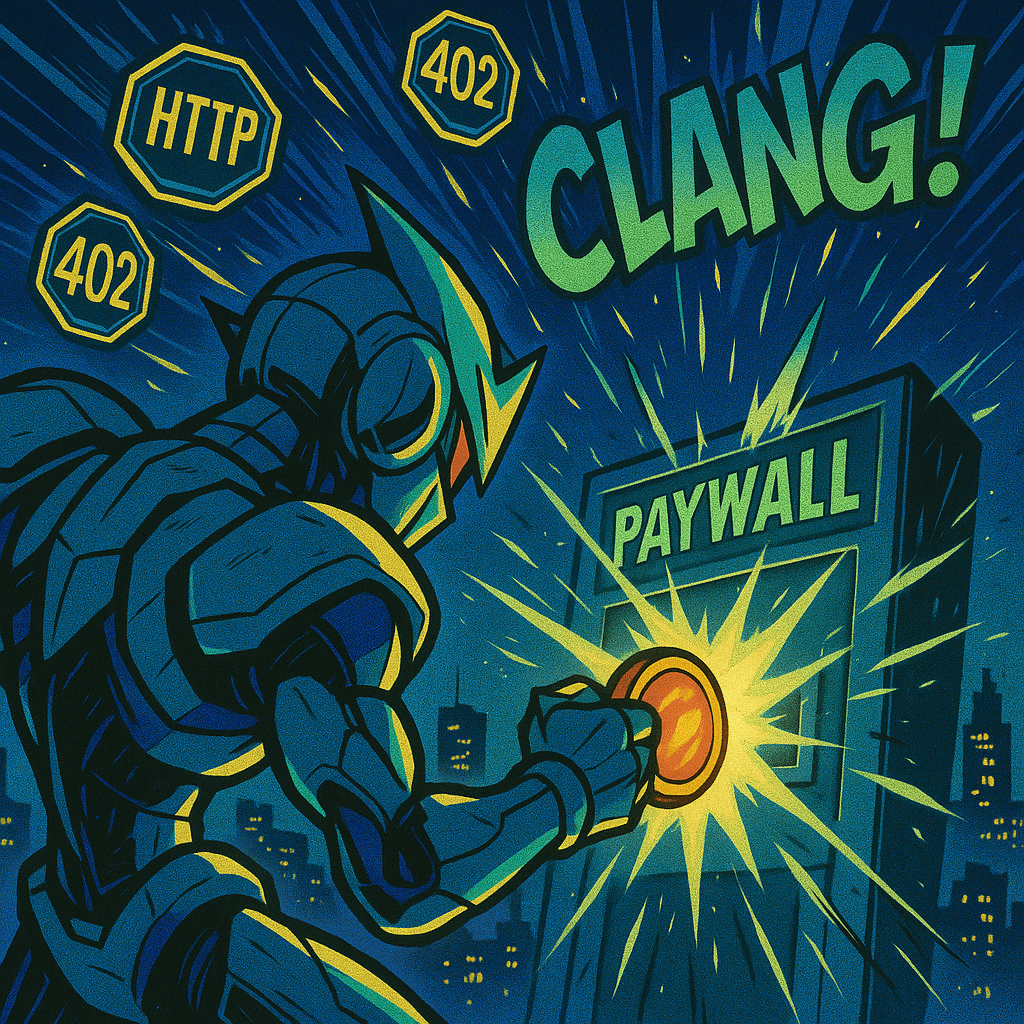
Cloudflare’s private-beta “pay-per-crawl” system detects known AI crawlers and forces them to either pay per request or get blocked. By routing micropayments directly to content creators, publishers can finally monetize AI-driven indexing and curb unauthorized scraping without pricing consumers out.
Cloudflare’s private-beta “pay-per-crawl” system detects known AI crawlers and forces them to either pay per request or get blocked. By routing micropayments directly to content creators, publishers can finally monetize AI-driven indexing and curb unauthorized scraping without pricing consumers out.
Cloudflare’s private-beta “pay-per-crawl” system detects known AI crawlers and forces them to either pay per request or get blocked. By routing micropayments directly to content creators, publishers can finally monetize AI-driven indexing and curb unauthorized scraping without pricing consumers out.
In this post:
In this post:
In this post:
Section
Section
Section
Introduction
The explosion of generative AI has reshaped how information is harvested and disseminated online. As AI-driven systems such as large language models (LLMs) increasingly rely on automated crawling to aggregate vast swaths of web content, traditional publishers have seen traffic—and, by extension, ad revenue—erode. In the past six months alone, Google’s crawl-to-referral ratio fell from 6:1 to 18:1, while OpenAI’s ratio now towers at 1,500:1, a stark indicator that AI firms are extracting far more content than they’re directing back to original sites (reuters.com). This shift has prompted publishers and content creators to demand new mechanisms of control and compensation for AI-driven indexing.
The Challenge of Unauthorized AI Scraping
Content creators face an uphill battle against unauthorized scraping. While search engines generally abide by robots.txt and well-established crawl rates, many AI-focused crawlers bypass these conventions, harvesting text, images, and data without honoring standard web protocols. The result is a drain on publisher resources, as page views and ad impressions are siphoned off, and brand recognition diminishes. Faced with an ecosystem in which AI firms claim they have broad legal rights to crawl public domains, several major organizations—including The New York Times and Reddit—have resorted to copyright infringement lawsuits, while others have pursued bespoke licensing agreements to regain some leverage (reuters.com).
Cloudflare’s Pay-Per-Crawl: A New Pathway
In response to mounting pressure, Cloudflare announced its private-beta “Pay Per Crawl” system on July 1, 2025. Designed as part of the company’s AI Audit suite, this feature empowers domain owners to choose among three distinct modes of engagement with AI crawlers: allow free access, block entirely, or charge a per-request fee (blog.cloudflare.com). This third option represents a middle ground between unfettered scraping and blanket bans, enabling publishers to monetize content at scale without alienating legitimate AI partners.
Under the Hood: HTTP 402 and Micropayments
At the heart of Pay Per Crawl lies the HTTP 402 Payment Required status code—a relic of the early web that Cloudflare has dusted off for the AI era. When an AI crawler sends a content request, Cloudflare’s edge network checks whether the request carries valid payment credentials in its headers. If so, the content is delivered with an HTTP 200 OK response; if not, the crawler receives a 402 response detailing the per-request price. Cloudflare then acts as the merchant of record, handling micropayment processing—often denominated in sub-cent increments via USDC or similar stablecoins—to settle instantly with the publisher, ensuring transactions remain frictionless for both parties (blog.cloudflare.com, developers.cloudflare.com).
Publisher Controls and Pricing Strategies
Publishers wield granular control over their Pay Per Crawl settings. They can define uniform pricing per request across their domain or segment rates by sub-zone—for instance, charging higher fees for premium investigative journalism and lower fees for static reference material. Through Cloudflare’s dashboard, site operators configure rules to automatically block unapproved crawlers, permit recognized AI agents under a free tier, or impose fees. This flexibility allows content owners to calibrate their monetization strategies in alignment with business objectives, whether that entails maximizing revenue, expanding AI-driven discovery, or safeguarding proprietary data (blog.cloudflare.com).
Endorsements from Leading Publishers
The initiative has garnered quick uptake among major digital publishing players. Condé Nast, The Associated Press, Gannett, Time, and Stack Overflow are among the early adopters exploring Pay Per Crawl’s potential to recapture value lost to AI indexing (reuters.com, businessinsider.com). Meanwhile, platforms like Reddit and Pinterest—long frustrated by unmonetized scraping—have signaled interest in a framework that transforms crawling costs into revenue streams. Even The Atlantic and The Wall Street Journal are in discussions to pilot pilot-scale implementations, demonstrating the broad industry appetite for equitable AI content licensing (theverge.com).
Implications for AI Companies
Cloudflare’s tollbooth approach compels AI enterprises to rethink their crawling strategies. Instead of cost-free harvesting, AI firms must now build Pay Per Crawl compliance into their data pipelines—either by integrating payment headers into HTTP requests or negotiating enterprise-level licensing agreements. Early reports suggest that some smaller AI startups are weighing the additional costs against the quality improvements of licensed data, while larger players like Google and Anthropic may leverage existing partnerships to absorb micropayment expenses (techcrunch.com). The economic calculus of training and inference could shift accordingly, potentially narrowing the data moat favoring well-funded AI labs.
Navigating Challenges and Industry Debate
Despite its promise, Pay Per Crawl raises questions around fragmentation and accessibility. Critics argue that a web segmented by micropayment gates may stifle innovation, especially for open-source AI projects with limited budgets. SEO experts worry about reduced content visibility if crawlers balk at fees, potentially disrupting discoverability and organic search rankings. Indeed, the SEO community has sparked vigorous debate over whether monetization tools like Pay Per Crawl align with the open web ethos or risk erecting new paywalls that favor incumbents over smaller creators (searchenginejournal.com).
Looking Ahead: A Fairer Web Economy?
Cloudflare posits that Pay Per Crawl could herald a more balanced internet, where content creators—and by extension, readers—benefit from AI’s capabilities without bearing hidden costs. By routing micropayments directly to publishers, the system promises to restore revenue parity lost to algorithmic indexing. If broadly adopted, this model might encourage AI developers to negotiate content rights upfront, fostering a transparent marketplace for data access. Some observers even suggest Pay Per Crawl could inspire parallel mechanisms for other forms of digital IP, such as video streaming and API usage, reshaping the broader digital economy (niemanlab.org).
Conclusion
Cloudflare’s Pay Per Crawl initiative addresses a pivotal tension in today’s AI-driven landscape: the need to balance unfettered innovation with fair compensation for original creators. By resurrecting HTTP 402 and embedding payment flows into web infrastructure, Cloudflare offers a pragmatic path forward that neither cedes value to AI crawlers nor erects insurmountable barriers. As private beta pilots evolve and stakeholder feedback accumulates, the broader internet community will be watching closely. The ultimate test will be whether Pay Per Crawl can scale equitably—knitting together diverse publisher needs, AI company budgets, and user expectations into a sustainable tapestry for the AI era.
Introduction
The explosion of generative AI has reshaped how information is harvested and disseminated online. As AI-driven systems such as large language models (LLMs) increasingly rely on automated crawling to aggregate vast swaths of web content, traditional publishers have seen traffic—and, by extension, ad revenue—erode. In the past six months alone, Google’s crawl-to-referral ratio fell from 6:1 to 18:1, while OpenAI’s ratio now towers at 1,500:1, a stark indicator that AI firms are extracting far more content than they’re directing back to original sites (reuters.com). This shift has prompted publishers and content creators to demand new mechanisms of control and compensation for AI-driven indexing.
The Challenge of Unauthorized AI Scraping
Content creators face an uphill battle against unauthorized scraping. While search engines generally abide by robots.txt and well-established crawl rates, many AI-focused crawlers bypass these conventions, harvesting text, images, and data without honoring standard web protocols. The result is a drain on publisher resources, as page views and ad impressions are siphoned off, and brand recognition diminishes. Faced with an ecosystem in which AI firms claim they have broad legal rights to crawl public domains, several major organizations—including The New York Times and Reddit—have resorted to copyright infringement lawsuits, while others have pursued bespoke licensing agreements to regain some leverage (reuters.com).
Cloudflare’s Pay-Per-Crawl: A New Pathway
In response to mounting pressure, Cloudflare announced its private-beta “Pay Per Crawl” system on July 1, 2025. Designed as part of the company’s AI Audit suite, this feature empowers domain owners to choose among three distinct modes of engagement with AI crawlers: allow free access, block entirely, or charge a per-request fee (blog.cloudflare.com). This third option represents a middle ground between unfettered scraping and blanket bans, enabling publishers to monetize content at scale without alienating legitimate AI partners.
Under the Hood: HTTP 402 and Micropayments
At the heart of Pay Per Crawl lies the HTTP 402 Payment Required status code—a relic of the early web that Cloudflare has dusted off for the AI era. When an AI crawler sends a content request, Cloudflare’s edge network checks whether the request carries valid payment credentials in its headers. If so, the content is delivered with an HTTP 200 OK response; if not, the crawler receives a 402 response detailing the per-request price. Cloudflare then acts as the merchant of record, handling micropayment processing—often denominated in sub-cent increments via USDC or similar stablecoins—to settle instantly with the publisher, ensuring transactions remain frictionless for both parties (blog.cloudflare.com, developers.cloudflare.com).
Publisher Controls and Pricing Strategies
Publishers wield granular control over their Pay Per Crawl settings. They can define uniform pricing per request across their domain or segment rates by sub-zone—for instance, charging higher fees for premium investigative journalism and lower fees for static reference material. Through Cloudflare’s dashboard, site operators configure rules to automatically block unapproved crawlers, permit recognized AI agents under a free tier, or impose fees. This flexibility allows content owners to calibrate their monetization strategies in alignment with business objectives, whether that entails maximizing revenue, expanding AI-driven discovery, or safeguarding proprietary data (blog.cloudflare.com).
Endorsements from Leading Publishers
The initiative has garnered quick uptake among major digital publishing players. Condé Nast, The Associated Press, Gannett, Time, and Stack Overflow are among the early adopters exploring Pay Per Crawl’s potential to recapture value lost to AI indexing (reuters.com, businessinsider.com). Meanwhile, platforms like Reddit and Pinterest—long frustrated by unmonetized scraping—have signaled interest in a framework that transforms crawling costs into revenue streams. Even The Atlantic and The Wall Street Journal are in discussions to pilot pilot-scale implementations, demonstrating the broad industry appetite for equitable AI content licensing (theverge.com).
Implications for AI Companies
Cloudflare’s tollbooth approach compels AI enterprises to rethink their crawling strategies. Instead of cost-free harvesting, AI firms must now build Pay Per Crawl compliance into their data pipelines—either by integrating payment headers into HTTP requests or negotiating enterprise-level licensing agreements. Early reports suggest that some smaller AI startups are weighing the additional costs against the quality improvements of licensed data, while larger players like Google and Anthropic may leverage existing partnerships to absorb micropayment expenses (techcrunch.com). The economic calculus of training and inference could shift accordingly, potentially narrowing the data moat favoring well-funded AI labs.
Navigating Challenges and Industry Debate
Despite its promise, Pay Per Crawl raises questions around fragmentation and accessibility. Critics argue that a web segmented by micropayment gates may stifle innovation, especially for open-source AI projects with limited budgets. SEO experts worry about reduced content visibility if crawlers balk at fees, potentially disrupting discoverability and organic search rankings. Indeed, the SEO community has sparked vigorous debate over whether monetization tools like Pay Per Crawl align with the open web ethos or risk erecting new paywalls that favor incumbents over smaller creators (searchenginejournal.com).
Looking Ahead: A Fairer Web Economy?
Cloudflare posits that Pay Per Crawl could herald a more balanced internet, where content creators—and by extension, readers—benefit from AI’s capabilities without bearing hidden costs. By routing micropayments directly to publishers, the system promises to restore revenue parity lost to algorithmic indexing. If broadly adopted, this model might encourage AI developers to negotiate content rights upfront, fostering a transparent marketplace for data access. Some observers even suggest Pay Per Crawl could inspire parallel mechanisms for other forms of digital IP, such as video streaming and API usage, reshaping the broader digital economy (niemanlab.org).
Conclusion
Cloudflare’s Pay Per Crawl initiative addresses a pivotal tension in today’s AI-driven landscape: the need to balance unfettered innovation with fair compensation for original creators. By resurrecting HTTP 402 and embedding payment flows into web infrastructure, Cloudflare offers a pragmatic path forward that neither cedes value to AI crawlers nor erects insurmountable barriers. As private beta pilots evolve and stakeholder feedback accumulates, the broader internet community will be watching closely. The ultimate test will be whether Pay Per Crawl can scale equitably—knitting together diverse publisher needs, AI company budgets, and user expectations into a sustainable tapestry for the AI era.
Introduction
The explosion of generative AI has reshaped how information is harvested and disseminated online. As AI-driven systems such as large language models (LLMs) increasingly rely on automated crawling to aggregate vast swaths of web content, traditional publishers have seen traffic—and, by extension, ad revenue—erode. In the past six months alone, Google’s crawl-to-referral ratio fell from 6:1 to 18:1, while OpenAI’s ratio now towers at 1,500:1, a stark indicator that AI firms are extracting far more content than they’re directing back to original sites (reuters.com). This shift has prompted publishers and content creators to demand new mechanisms of control and compensation for AI-driven indexing.
The Challenge of Unauthorized AI Scraping
Content creators face an uphill battle against unauthorized scraping. While search engines generally abide by robots.txt and well-established crawl rates, many AI-focused crawlers bypass these conventions, harvesting text, images, and data without honoring standard web protocols. The result is a drain on publisher resources, as page views and ad impressions are siphoned off, and brand recognition diminishes. Faced with an ecosystem in which AI firms claim they have broad legal rights to crawl public domains, several major organizations—including The New York Times and Reddit—have resorted to copyright infringement lawsuits, while others have pursued bespoke licensing agreements to regain some leverage (reuters.com).
Cloudflare’s Pay-Per-Crawl: A New Pathway
In response to mounting pressure, Cloudflare announced its private-beta “Pay Per Crawl” system on July 1, 2025. Designed as part of the company’s AI Audit suite, this feature empowers domain owners to choose among three distinct modes of engagement with AI crawlers: allow free access, block entirely, or charge a per-request fee (blog.cloudflare.com). This third option represents a middle ground between unfettered scraping and blanket bans, enabling publishers to monetize content at scale without alienating legitimate AI partners.
Under the Hood: HTTP 402 and Micropayments
At the heart of Pay Per Crawl lies the HTTP 402 Payment Required status code—a relic of the early web that Cloudflare has dusted off for the AI era. When an AI crawler sends a content request, Cloudflare’s edge network checks whether the request carries valid payment credentials in its headers. If so, the content is delivered with an HTTP 200 OK response; if not, the crawler receives a 402 response detailing the per-request price. Cloudflare then acts as the merchant of record, handling micropayment processing—often denominated in sub-cent increments via USDC or similar stablecoins—to settle instantly with the publisher, ensuring transactions remain frictionless for both parties (blog.cloudflare.com, developers.cloudflare.com).
Publisher Controls and Pricing Strategies
Publishers wield granular control over their Pay Per Crawl settings. They can define uniform pricing per request across their domain or segment rates by sub-zone—for instance, charging higher fees for premium investigative journalism and lower fees for static reference material. Through Cloudflare’s dashboard, site operators configure rules to automatically block unapproved crawlers, permit recognized AI agents under a free tier, or impose fees. This flexibility allows content owners to calibrate their monetization strategies in alignment with business objectives, whether that entails maximizing revenue, expanding AI-driven discovery, or safeguarding proprietary data (blog.cloudflare.com).
Endorsements from Leading Publishers
The initiative has garnered quick uptake among major digital publishing players. Condé Nast, The Associated Press, Gannett, Time, and Stack Overflow are among the early adopters exploring Pay Per Crawl’s potential to recapture value lost to AI indexing (reuters.com, businessinsider.com). Meanwhile, platforms like Reddit and Pinterest—long frustrated by unmonetized scraping—have signaled interest in a framework that transforms crawling costs into revenue streams. Even The Atlantic and The Wall Street Journal are in discussions to pilot pilot-scale implementations, demonstrating the broad industry appetite for equitable AI content licensing (theverge.com).
Implications for AI Companies
Cloudflare’s tollbooth approach compels AI enterprises to rethink their crawling strategies. Instead of cost-free harvesting, AI firms must now build Pay Per Crawl compliance into their data pipelines—either by integrating payment headers into HTTP requests or negotiating enterprise-level licensing agreements. Early reports suggest that some smaller AI startups are weighing the additional costs against the quality improvements of licensed data, while larger players like Google and Anthropic may leverage existing partnerships to absorb micropayment expenses (techcrunch.com). The economic calculus of training and inference could shift accordingly, potentially narrowing the data moat favoring well-funded AI labs.
Navigating Challenges and Industry Debate
Despite its promise, Pay Per Crawl raises questions around fragmentation and accessibility. Critics argue that a web segmented by micropayment gates may stifle innovation, especially for open-source AI projects with limited budgets. SEO experts worry about reduced content visibility if crawlers balk at fees, potentially disrupting discoverability and organic search rankings. Indeed, the SEO community has sparked vigorous debate over whether monetization tools like Pay Per Crawl align with the open web ethos or risk erecting new paywalls that favor incumbents over smaller creators (searchenginejournal.com).
Looking Ahead: A Fairer Web Economy?
Cloudflare posits that Pay Per Crawl could herald a more balanced internet, where content creators—and by extension, readers—benefit from AI’s capabilities without bearing hidden costs. By routing micropayments directly to publishers, the system promises to restore revenue parity lost to algorithmic indexing. If broadly adopted, this model might encourage AI developers to negotiate content rights upfront, fostering a transparent marketplace for data access. Some observers even suggest Pay Per Crawl could inspire parallel mechanisms for other forms of digital IP, such as video streaming and API usage, reshaping the broader digital economy (niemanlab.org).
Conclusion
Cloudflare’s Pay Per Crawl initiative addresses a pivotal tension in today’s AI-driven landscape: the need to balance unfettered innovation with fair compensation for original creators. By resurrecting HTTP 402 and embedding payment flows into web infrastructure, Cloudflare offers a pragmatic path forward that neither cedes value to AI crawlers nor erects insurmountable barriers. As private beta pilots evolve and stakeholder feedback accumulates, the broader internet community will be watching closely. The ultimate test will be whether Pay Per Crawl can scale equitably—knitting together diverse publisher needs, AI company budgets, and user expectations into a sustainable tapestry for the AI era.
Ready to scale your brand to new heights?
If you want to achieve ground-breaking growth with increased sales and profitability with paid ads, then you're in the right place.
Ready to make your vision a reality?
See how Genie Media Solutions can create custom digital strategies designed specifically to propel your business forward.
Ready to make your vision a reality?
See how Genie Media Solutions can create custom digital strategies designed specifically to propel your business forward.
Ready to make your vision a reality?
See how Genie Media Solutions can create custom digital strategies designed specifically to propel your business forward.